Introduction
Feeling tired all the time has become one of the most common health concerns in modern life. Many people wake up exhausted, struggle to stay productive during the day, and feel mentally drained even without intense physical activity. This constant fatigue is not always due to lack of sleep. It often results from lifestyle patterns, stress, nutrition, daily habits, and body imbalances.
On Aimketodiet.com, the focus is on helping people understand the root causes of everyday health problems and offering practical solutions that can be followed easily. Persistent tiredness is the body’s signal that something needs attention — whether it is sleep quality, hydration, stress, physical inactivity, or dietary habits.
This guide explores the real reasons behind constant fatigue and explains natural, sustainable ways to restore energy, improve focus, and build long-term vitality.
Understanding Fatigue Beyond Sleep
Fatigue is not simply about feeling sleepy. It can affect both the body and the mind.
Types of tiredness people experience
Physical exhaustion
Mental fatigue
Emotional burnout
Lack of motivation
Low energy despite resting
These symptoms often overlap and gradually affect productivity, mood, and overall health.
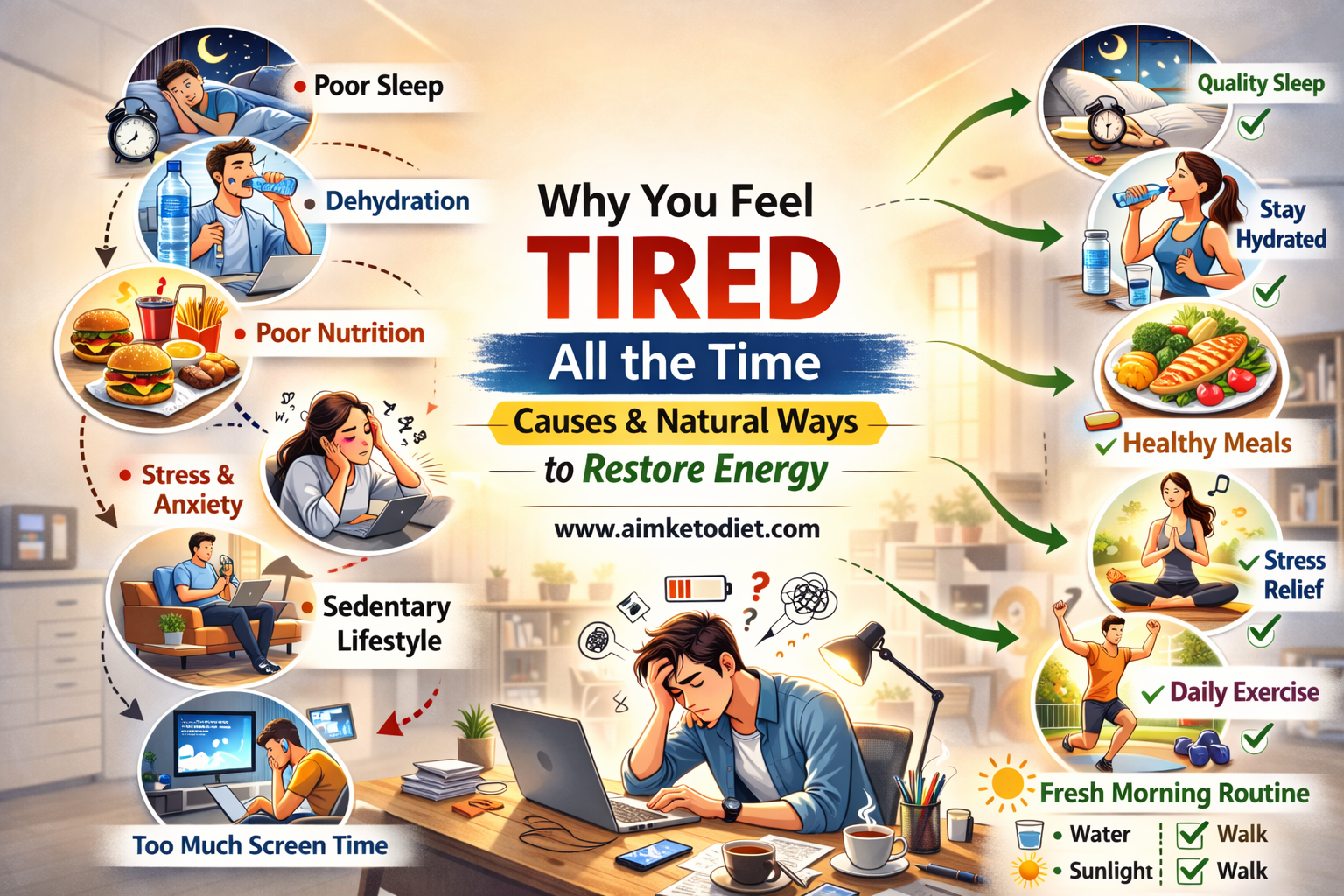
Poor Sleep Quality and Energy Drain
Sleep is the foundation of energy restoration. However, many people sleep for hours but still feel tired because the sleep quality is poor.
Reasons sleep may not restore energy
Irregular sleep schedule
Excessive screen exposure at night
Stress and overthinking
Uncomfortable sleeping environment
Improving sleep for better energy
Maintain consistent sleep and wake times
Reduce mobile and screen use before bed
Create a calm, dark sleep environment
Allow the body to unwind before sleeping
Quality sleep supports hormone balance and improves daily energy levels.
Nutritional Habits That Cause Fatigue
Food plays a major role in energy production. Poor nutrition leads to constant tiredness.
Common dietary reasons for low energy
Skipping meals
Excess sugar intake
Lack of nutrient-rich foods
Overeating processed foods
Energy-supporting eating habits
Balanced meals with proteins and fiber
Regular meal timing
Whole foods instead of processed items
Proper portion awareness
When the body receives proper nourishment, energy levels become stable throughout the day.
Dehydration and Low Energy
Water is essential for metabolism, digestion, and brain function. Even mild dehydration can cause fatigue.
Signs of dehydration
Headaches
Low concentration
Weakness
Dry mouth
Hydration habits to follow
Drink water throughout the day
Increase intake during physical activity
Avoid excessive sugary beverages
Proper hydration improves alertness and physical performance.
Stress and Emotional Exhaustion
Mental stress is one of the biggest causes of fatigue. Continuous worry drains energy even without physical effort.
How stress leads to tiredness
Disrupts sleep cycles
Affects hormone balance
Reduces motivation
Causes mental overload
Stress management practices
Deep breathing exercises
Mindfulness and meditation
Spending time outdoors
Short breaks during work
Reducing stress restores emotional energy and improves mental clarity.
Lack of Physical Movement
A sedentary lifestyle reduces blood circulation and energy production.
Effects of inactivity
Slower metabolism
Reduced stamina
Poor posture
Increased fatigue
Movement-based energy boosters
Walking daily
Stretching breaks
Light home exercises
Outdoor activity
Regular movement increases oxygen flow and boosts energy naturally.
Excessive Screen Time and Mental Fatigue
Continuous exposure to screens causes mental exhaustion.
Impact of screen overuse
Eye strain
Reduced sleep quality
Mental overload
Reduced focus
Healthy screen habits
Take regular digital breaks
Avoid screens before bedtime
Limit unnecessary scrolling
This helps refresh the mind and improve concentration.
Hormonal Imbalance and Energy Levels
Hormones regulate sleep, metabolism, mood, and energy.
Factors affecting hormonal balance
Sleep irregularity
Stress
Poor diet
Lack of physical activity
Improving daily habits supports natural hormonal balance.
Lifestyle Patterns That Drain Energy
Many daily habits unknowingly reduce energy.
Energy-draining routines
Irregular meal timings
Late-night sleeping
Lack of sunlight exposure
Skipping physical activity
Correcting these gradually restores vitality.
Importance of Morning Habits
How the day begins affects energy levels.
Energy-boosting morning practices
Drinking water after waking
Gentle stretching
Exposure to sunlight
Light physical movement
These activate the body’s natural energy system.
Mental Overload and Productivity Pressure
Constant multitasking and high expectations lead to mental fatigue.
Signs of mental overload
Difficulty concentrating
Reduced creativity
Irritability
Lack of motivation
Solutions for mental clarity
Prioritizing tasks
Taking mindful breaks
Reducing unnecessary workload
Balanced work patterns protect mental energy.
Gut Health and Energy
Digestive health influences nutrient absorption and energy production.
Poor gut health symptoms
Bloating
Fatigue
Low immunity
Gut-supporting habits
Eating fiber-rich foods
Staying hydrated
Maintaining regular meal timings
Healthy digestion supports sustained energy.
Sunlight and Natural Energy Regulation
Exposure to natural light regulates body rhythms.
Benefits of sunlight
Improves mood
Supports sleep cycles
Boosts vitamin production
Enhances alertness
Spending time outdoors improves both mental and physical energy.
Long-Term Effects of Ignoring Fatigue
Constant tiredness affects overall health if left unmanaged.
Possible long-term issues
Reduced productivity
Mood disorders
Lifestyle diseases
Poor immunity
Addressing fatigue early prevents bigger health challenges.
Building Sustainable Energy Habits
Energy is built through consistent lifestyle choices rather than temporary solutions.
Focus areas for daily vitality
Sleep quality
Balanced nutrition
Hydration
Movement
Stress management
Routine consistency
Small changes practiced daily produce long-term results.
Conclusion
Feeling tired all the time is not something to ignore. It is the body’s way of signaling imbalance in daily habits, nutrition, sleep, or mental health. Understanding these signals and responding with simple lifestyle adjustments can significantly improve energy levels.
Aimketodiet.com emphasizes realistic, sustainable health guidance that helps individuals regain energy naturally. When sleep improves, stress is managed, hydration is maintained, and daily routines become structured, the body begins to function efficiently and fatigue gradually disappears.
Energy is not built overnight. It develops through consistent habits, balanced routines, and mindful living. With the right approach, it is possible to feel active, focused, and refreshed every day.