Introduction: Why Gut Health Is the Missing Link in Modern Health Struggles
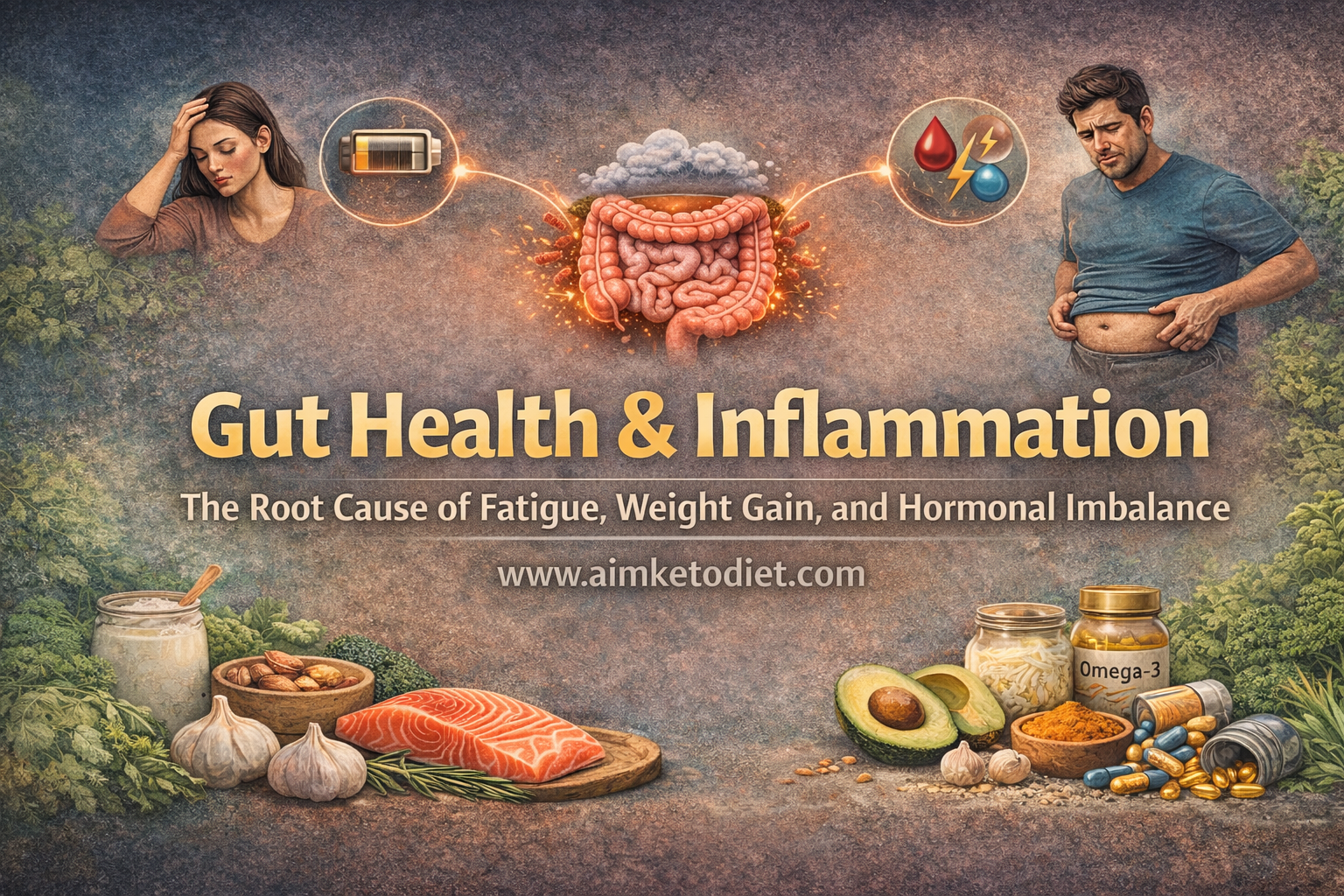
In today’s world, many people struggle with constant fatigue, unexplained weight gain, stubborn belly fat, mood swings, and hormonal imbalances despite trying multiple diets and exercise routines. They reduce calories, eliminate carbs, take supplements, and follow trending health advice — yet progress remains slow or temporary.
What often goes unnoticed is the foundational role of gut health.
The digestive system is not just responsible for processing food. It is a central regulator of immunity, metabolism, hormone balance, brain chemistry, and inflammation. When the gut functions properly, the body absorbs nutrients efficiently, regulates blood sugar smoothly, and maintains stable energy levels. When gut function declines, inflammation rises quietly in the background, disrupting multiple systems at once.
On Aimketodiet.com, we focus on identifying the root causes behind modern metabolic health problems. One of the most overlooked root causes is chronic low-grade inflammation driven by poor gut health. Understanding this connection can completely change how you approach fatigue, weight loss resistance, and hormonal imbalance.
True transformation does not begin with extreme dieting — it begins with repairing the internal environment.
Understanding Gut Health Beyond Basic Digestion
Most people associate gut health with digestion alone — bloating, constipation, diarrhea, or acid reflux. However, gut health extends far beyond these visible symptoms.
Your digestive system houses trillions of microorganisms collectively known as the gut microbiome. These microbes are not passive inhabitants. They actively participate in:
Breaking down complex fibers
Producing essential vitamins
Regulating immune responses
Controlling inflammation
Influencing appetite hormones
Supporting brain chemistry
The gut lining itself functions as a selective barrier. It allows nutrients to pass into the bloodstream while preventing harmful particles, toxins, and bacteria from entering circulation. When this barrier remains intact, systemic inflammation stays controlled.
But when this balance is disturbed — either through diet, stress, infections, or lifestyle factors — the consequences ripple throughout the entire body.
The Gut Microbiome: Your Internal Metabolic Partner
The microbiome plays a direct role in how your body processes energy. Certain gut bacteria help extract nutrients efficiently from food, while others influence how much fat your body stores.
Research has shown that individuals with obesity often have different microbiome compositions compared to lean individuals. Some bacterial strains are more efficient at extracting calories, while others support metabolic flexibility and insulin sensitivity.
A diverse and balanced microbiome produces short-chain fatty acids, which:
Reduce inflammation
Improve insulin sensitivity
Support gut barrier integrity
Promote fat oxidation
When microbial diversity declines, inflammation increases and metabolic efficiency decreases. This makes weight loss harder, cravings stronger, and energy levels less stable.
Gut imbalance is not just a digestive issue — it is a metabolic issue.
Chronic Inflammation: The Silent Metabolic Disruptor
Inflammation is often misunderstood. It is not always visible. You may not feel pain or see swelling. Chronic inflammation operates silently at the cellular level.
When the gut barrier weakens or harmful bacteria dominate, inflammatory molecules enter the bloodstream. These molecules interfere with normal cellular communication.
Chronic inflammation disrupts:
Insulin signaling
Thyroid hormone conversion
Leptin sensitivity (hunger regulation)
Cortisol balance
Mitochondrial energy production
As a result, the body becomes metabolically inefficient. Fat burning slows, energy production decreases, and hormonal communication weakens.
This is why people often experience:
Fatigue despite adequate sleep
Stubborn weight gain
Brain fog
Increased sugar cravings
Mood instability
Inflammation quietly sabotages progress.
Leaky Gut and Systemic Health Effects
The intestinal lining is designed to be selectively permeable. It allows digested nutrients to enter circulation while keeping harmful substances inside the digestive tract.
When this lining becomes compromised — due to processed foods, excessive sugar, alcohol, chronic stress, or infections — its permeability increases. This condition is commonly referred to as increased intestinal permeability or “leaky gut.”
When permeability increases:
Undigested food particles enter the bloodstream
Bacterial toxins circulate
The immune system becomes hyperactive
Inflammation spreads systemically
The symptoms may not appear digestive in nature. Instead, they show up as:
Skin issues
Joint discomfort
Autoimmune reactions
Hormonal irregularities
Persistent fatigue
Because these symptoms appear disconnected from digestion, many people never suspect the gut as the root cause.
The Gut–Energy Connection: Why You Feel Tired All the Time
Energy production depends on nutrient absorption and mitochondrial efficiency. If nutrients such as magnesium, B vitamins, iron, and amino acids are poorly absorbed due to gut dysfunction, cellular energy production declines.
Additionally, chronic inflammation forces the immune system into a constant state of activation. This requires energy. The body diverts resources away from metabolic efficiency toward inflammatory defense.
The result is persistent fatigue — even if sleep is adequate and calorie intake is sufficient.
Many people mistakenly attribute this exhaustion to aging or stress, when the true cause lies in impaired gut function and chronic inflammation.
Gut Health and Weight Gain: The Hidden Mechanism
Weight gain is rarely just about willpower. It is often about hormonal and metabolic signaling.
Gut imbalance contributes to weight gain through several mechanisms:
First, inflammation increases insulin resistance. When cells become resistant to insulin, glucose is more likely to be stored as fat rather than used as energy.
Second, microbiome imbalance affects hunger hormones. Disruption in gut bacteria can interfere with leptin and ghrelin signaling, making you feel hungrier even when caloric needs are met.
Third, inflammation raises cortisol levels. Elevated cortisol promotes fat storage, particularly around the abdominal region.
Even individuals following a low-carb or ketogenic approach may struggle with weight loss if gut inflammation remains unresolved.
The Gut–Hormone Axis: A Two-Way Relationship
Hormones and gut health are deeply interconnected.
The thyroid gland depends on proper nutrient absorption to convert inactive thyroid hormone (T4) into its active form (T3). Chronic inflammation interferes with this conversion process, contributing to symptoms such as cold intolerance, fatigue, and slow metabolism.
Estrogen metabolism also depends on gut bacteria. Certain beneficial microbes help regulate estrogen recycling. When microbial balance shifts, estrogen dominance may develop, leading to mood swings, bloating, and hormonal irregularities.
Cortisol, the stress hormone, increases when inflammation is high. Elevated cortisol further damages gut integrity, creating a cycle of stress and inflammation.
Healing the gut often improves hormonal balance naturally.
Keto Diet and Gut Health: Opportunity and Risk
A well-structured ketogenic diet can reduce inflammation, stabilize blood sugar, and improve insulin sensitivity. However, if poorly planned, it may reduce fiber intake and microbial diversity.
For optimal gut support while following keto:
Include non-starchy vegetables for fiber
Incorporate fermented foods when tolerated
Stay hydrated and maintain electrolyte balance
Avoid processed keto substitutes
At Aimketodiet.com, we emphasize that keto should support gut health, not compromise it. A balanced approach ensures metabolic benefits without sacrificing microbiome diversity.
Healing the Gut: A Practical Educational Framework
Healing begins with removing inflammatory triggers. Reducing processed foods, refined sugars, and artificial additives lowers gut irritation and microbial imbalance.
Next, nutrient density becomes essential. Foods rich in zinc, magnesium, collagen, and healthy fats help restore gut lining integrity.
Fiber diversity supports beneficial bacteria. Fermented foods introduce helpful microbes. Stress management protects the gut barrier.
Sleep is also crucial. During deep sleep, the body repairs tissues, including the intestinal lining.
Gut healing is not a quick fix. It is a gradual restoration of balance.
Long-Term Prevention: Protecting Your Internal Ecosystem
Maintaining gut health requires consistent habits:
Whole, minimally processed foods
Adequate hydration
Regular movement
Sunlight exposure
Stress regulation
Periodic health monitoring
When these foundations are in place, inflammation remains controlled and metabolic efficiency improves.
Conclusion: Why Gut Healing Is the Foundation of Sustainable Health
Many modern health struggles — fatigue, stubborn weight gain, hormonal imbalance, mood instability — share a common root: chronic inflammation driven by poor gut health.
Treating symptoms without addressing gut dysfunction often leads to temporary relief but long-term frustration. Real progress occurs when the internal environment is restored.
By improving gut integrity, balancing the microbiome, and reducing inflammation, the body naturally regains metabolic flexibility, hormonal balance, and steady energy production.
At Aimketodiet.com, the goal is not just short-term weight loss but sustainable metabolic health. Healing the gut creates the biological foundation for that transformation.
When the gut heals, the body follows.