Introduction
The keto diet has become one of the most discussed eating approaches in recent years. Along with popularity, it has also attracted countless opinions, fears, and misunderstandings. Many people hesitate to start keto because they hear alarming statements such as “keto is dangerous,” “keto damages organs,” or “keto is just another trend.”
These beliefs often come from misinformation, partial knowledge, or improper experiences.
The truth is that most negative ideas about keto are based on myths, not facts.
Understanding what is true and what is false is extremely important before starting any dietary change. When people follow keto without proper knowledge, mistakes happen — and those mistakes become myths.
This detailed guide explains the most common keto myths and the real facts behind them, using simple and clear explanations.
AimKetoDiet.com created this educational resource to help you follow keto with clarity, confidence, and correct understanding.
Why Are There So Many Myths About Keto?
Before discussing individual myths, it is important to understand why keto is surrounded by confusion.
Most myths exist because:
Keto is different from traditional diets
High-fat eating contradicts old nutrition beliefs
People mix medical conditions with nutrition keto
Many try keto incorrectly
Short-term experiences are generalized
When something challenges long-held beliefs, confusion naturally arises.
Myth 1: Keto Is Dangerous for Health
The Myth
Many people believe that keto harms the body because it includes fat and restricts carbohydrates.
The Fact
Keto does not damage the body when followed correctly.
Carbohydrates are not essential nutrients. The body does not require dietary sugar to survive because it can produce glucose when needed.
For healthy adults, keto is generally safe when:
Whole foods are eaten
Electrolytes are maintained
Extreme restriction is avoided
Problems usually occur due to poor execution, not keto itself.
Myth 2: Keto Causes Heart Disease
The Myth
High-fat diets automatically cause heart problems.
The Fact
Not all fats are harmful.
Keto emphasizes natural fats such as ghee, butter, coconut oil, and olive oil — not trans fats or processed oils.
Many people experience:
Reduced triglycerides
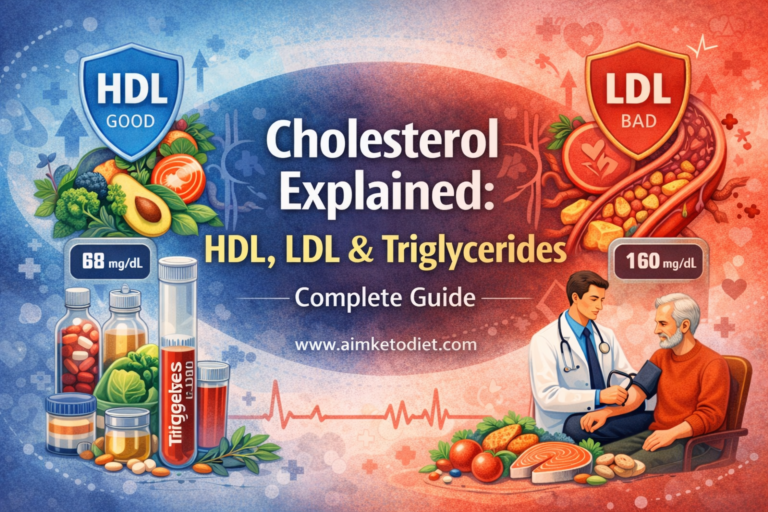
Improved HDL (good cholesterol)
Better insulin sensitivity
Heart risk is more strongly associated with sugar and processed carbohydrates than natural fats.
Myth 3: Keto Raises Cholesterol to Dangerous Levels
The Myth
People fear cholesterol increase on keto.
The Fact
Cholesterol responses vary individually.
Some may experience temporary changes during adaptation, which often stabilize later.
What matters is:
HDL levels
Triglyceride levels
Overall metabolic health
A single cholesterol number does not determine health.
Myth 4: Keto Is Just a Fad Diet
The Myth
Keto is often dismissed as a trend.
The Fact
The ketogenic diet has existed for nearly a century.
It was originally used clinically before weight loss applications became popular.
Keto is based on metabolic science, not marketing.
Myth 5: Keto Means Eating Unlimited Fat
The Myth
People think keto allows unlimited butter and oil.
The Fact
Keto uses fat as fuel, not excess indulgence.
Eating too much fat can still stall weight loss.
Fat intake should support energy needs, not exceed them unnecessarily.
Myth 6: Keto Causes Muscle Loss
The Myth
Low-carb diets destroy muscle.
The Fact
Keto is a moderate-protein diet.
When protein intake is adequate, muscle mass is preserved.
Ketones actually help reduce muscle breakdown during fat loss.
Myth 7: Keto Leads to Nutrient Deficiencies
The Myth
Removing grains and fruits causes nutrient loss.
The Fact
Most nutrients come from vegetables, proteins, and fats — not grains.
Keto includes:
Leafy greens
Vegetables
Nuts
Seeds
Dairy
Nutrient deficiency occurs only when food quality is poor.
Myth 8: Keto Is Not Safe for Women
The Myth
Some believe keto disrupts female hormones.
The Fact
Women respond well to keto when done correctly.
Issues usually arise from:
Extreme calorie restriction
Chronic under-eating
Excess stress
Balanced keto supports hormonal stability.
Myth 9: Keto Causes Kidney Damage
The Myth
People confuse keto with high-protein diets.
The Fact
Keto is not high protein.
It uses moderate protein and high fat.
Healthy individuals do not damage kidneys through proper keto.
Those with existing kidney disease should seek guidance.
Myth 10: Keto Causes Hair Fall
The Myth
Hair loss scares beginners.
The Fact
Temporary hair shedding can occur due to:
Rapid weight loss
Stress
Nutrient shifts
This is not permanent and usually resolves with proper nutrition.
Myth 11: Keto Slows Metabolism
The Myth
Low-carb diets damage metabolism.
The Fact
Keto often improves metabolic efficiency by stabilizing insulin and reducing sugar dependence.
Metabolic slowdown occurs mainly from extreme calorie restriction, not keto.
Myth 12: Keto Is Impossible to Maintain
The Myth
People think keto cannot be sustained.
The Fact
Many people follow keto long-term or transition to low-carb maintenance.
Sustainability depends on education, flexibility, and mindset.
Myth 13: Keto Means Never Eating Carbs Again
The Myth
Keto is seen as permanent carb elimination.
The Fact
Keto is a tool, not a prison.
Many people use keto temporarily and later increase carbs mindfully.
Myth 14: Keto Causes Digestive Problems
The Myth
Constipation is blamed on keto.
The Fact
Digestive issues often result from:
Low water intake
Low fiber vegetables
Electrolyte imbalance
With proper hydration and vegetables, digestion improves.
Myth 15: Keto Is Only for Weight Loss
The Myth
People think keto is cosmetic.
The Fact
Keto also supports:
Blood sugar control
Appetite regulation
Mental clarity
Energy balance
Weight loss is one of many effects.
Myth 16: Keto Is Unnatural
The Myth
Fat-based eating seems unnatural.
The Fact
Humans have evolved to survive in low-carb states.
Ketosis is a natural metabolic process.
Myth 17: Keto Requires Expensive Foods
The Myth
People think special products are needed.
The Fact
Keto can be done with simple foods:
Eggs
Vegetables
Paneer
Local oils
No imported foods required.
Myth 18: Keto Stops Working After Some Time
The Myth
People say keto stops.
The Fact
Plateaus occur due to:
Hidden carbs
Overeating
Poor sleep
Stress
Correcting habits restores progress.
Myth 19: Keto Is Dangerous Because It Produces Ketones
The Myth
Ketones are confused with ketoacidosis.
The Fact
Nutritional ketosis is safe and very different from diabetic ketoacidosis.
They are not the same condition.
Myth 20: Keto Is Too Restrictive
The Myth
Removing carbs feels limiting.
The Fact
Keto removes refined sugar, not nutrition.
Once adapted, many find keto freeing, not restrictive.
Why Understanding Myths Is Important
Believing myths leads to:
Fear
Inconsistency
Premature quitting
Poor decisions
Understanding facts builds confidence.
Keto Works When Done Correctly
Keto is not harmful when:
Real foods are used
Calories are reasonable
Stress is managed
Hydration is maintained
Most failures result from misinformation.
Keto Is a Tool, Not a Religion
Keto does not need to be extreme.
It should serve your health, not control your life.
Conclusion
The keto diet is surrounded by many myths that create fear and confusion. Most of these myths arise from misunderstanding, poor execution, or outdated beliefs about fat and carbohydrates.
When followed correctly, keto is a scientifically grounded metabolic approach that supports fat burning, appetite control, and improved energy balance.
Understanding the facts allows you to follow keto with confidence rather than fear.
AimKetoDiet.com is committed to providing clear, honest, and educational content so you can build a healthier lifestyle based on knowledge — not myths.